
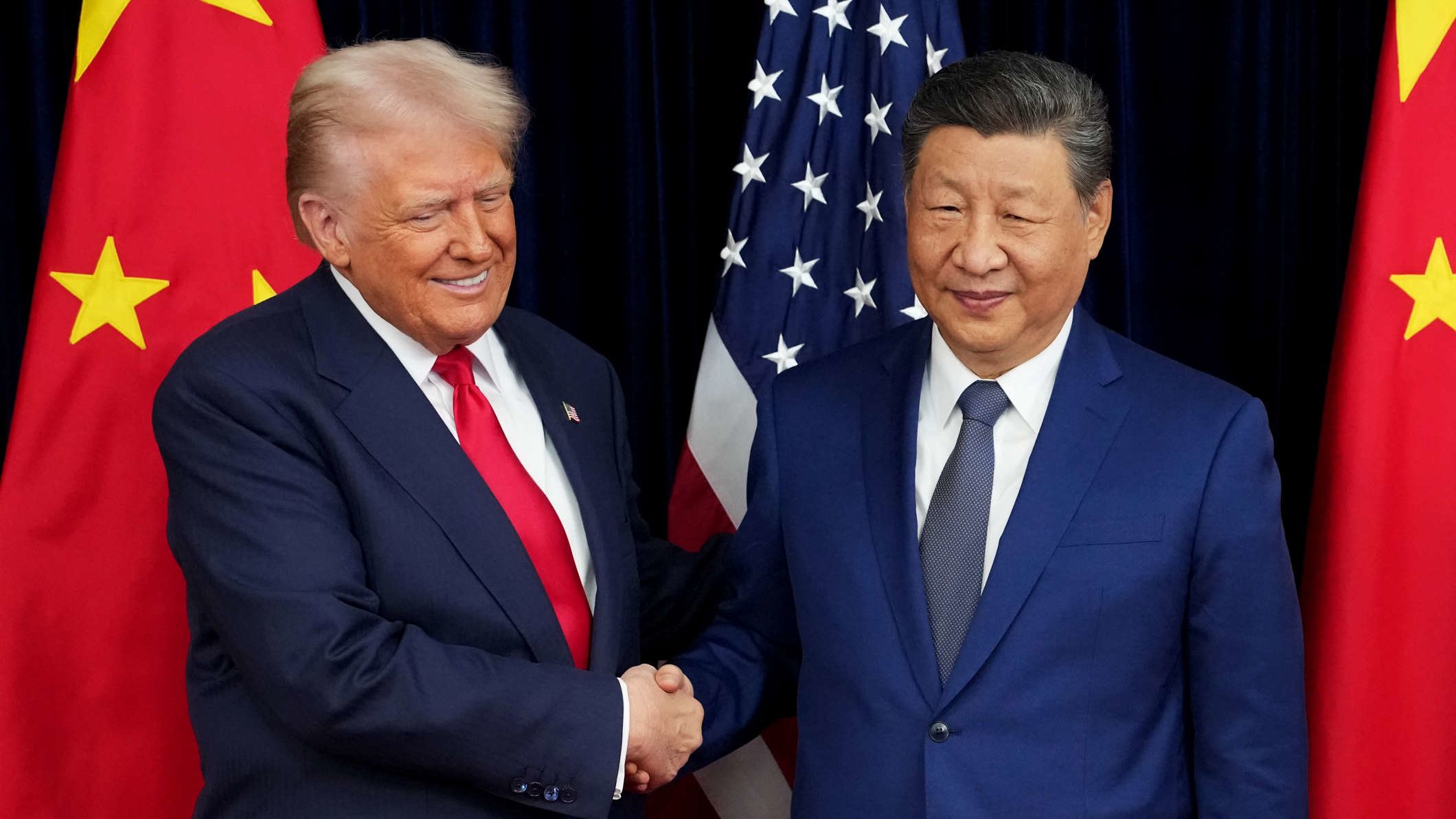
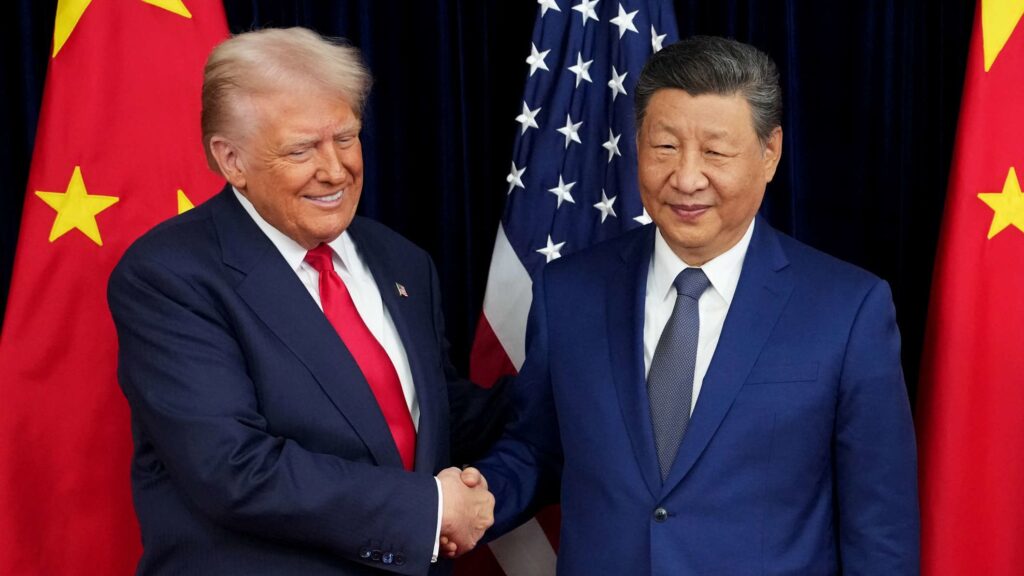
As the world keeps its eyes glued to the balance of power, President Trump landed in Beijing on Wednesday evening local time to meet with Chinese President Xi Jinping at a crucial moment in Mr. Trump’s presidency amid the war with Iran and uncertainty about the economy. The spectacle wasn’t just a hasty handshake and a ceremonial bow; it was a high-stakes navigation of a global chessboard where tariffs, diplomacy, and the future of international trade hang in the balance.
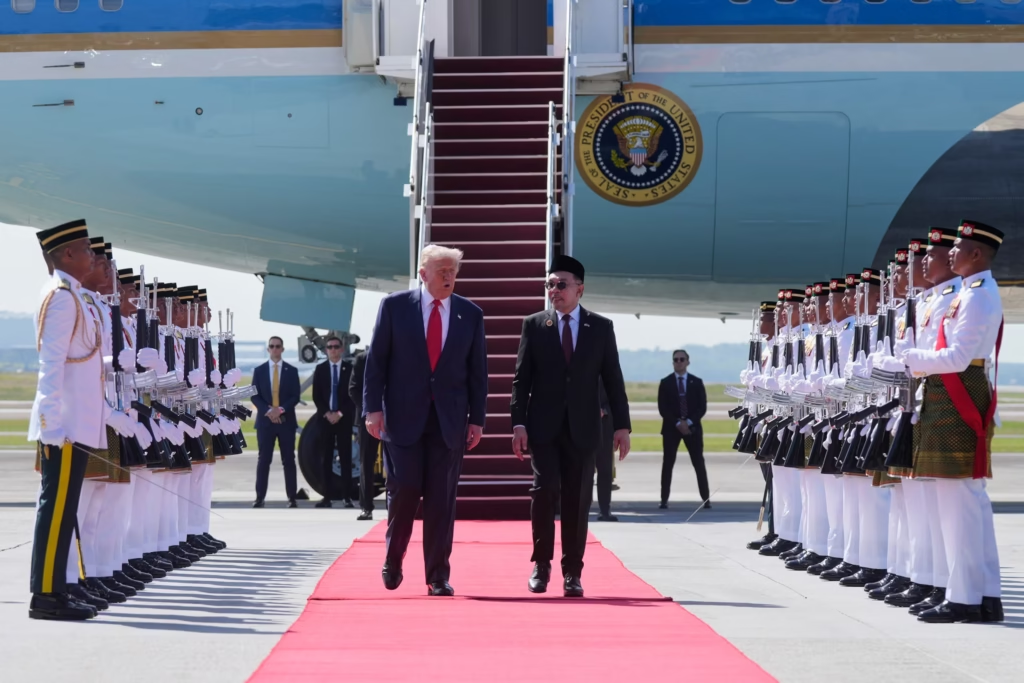
The arrival ceremony at the Beijing airport set the tone for what promises to be a marquee moment in Sino-American relations. The U.S. president and his entourage descended the steps of Air Force One to the cheers and cautious smiles of a carefully choreographed welcome. He was greeted by China’s vice president Han Zheng, foreign affairs minister Ma Zhaoxu, and ambassadors from both nations—an image that underscored the ritual seriousness of the moment. The staging mattered as much as the words that would be spoken inside the walls of the Great Hall of the People or behind closed doors in a more intimate setting.
“We’re the two superpowers,” Mr. Trump told reporters as he departed the White House on Tuesday. “We’re the strongest nation on Earth in terms of military. China’s considered second.” The line, delivered with the blunt, headline-friendly cadence that has defined his public communications, set the meme-friendly tone of a week that will be dissected by analysts, journalists, and policymakers around the globe. It’s a bold claim, and one that invites both praise and skepticism, depending on which metric you trust—from military expenditure and capability to soft power, diplomatic influence, and the resilience of domestic economies under pressure from global currents.
Cameras aren’t the only witnesses to this moment. Behind the dialogue and door-knocking, real policy decisions are taking shape: strategic choices on tariffs, technology access, supply chains, and regional security commitments. The Xi meeting is not merely a ritualized photo op; it’s a forum where each side tests red lines, triages concessions, and charts a path that could reduce uncertainty or, conversely, widen it.
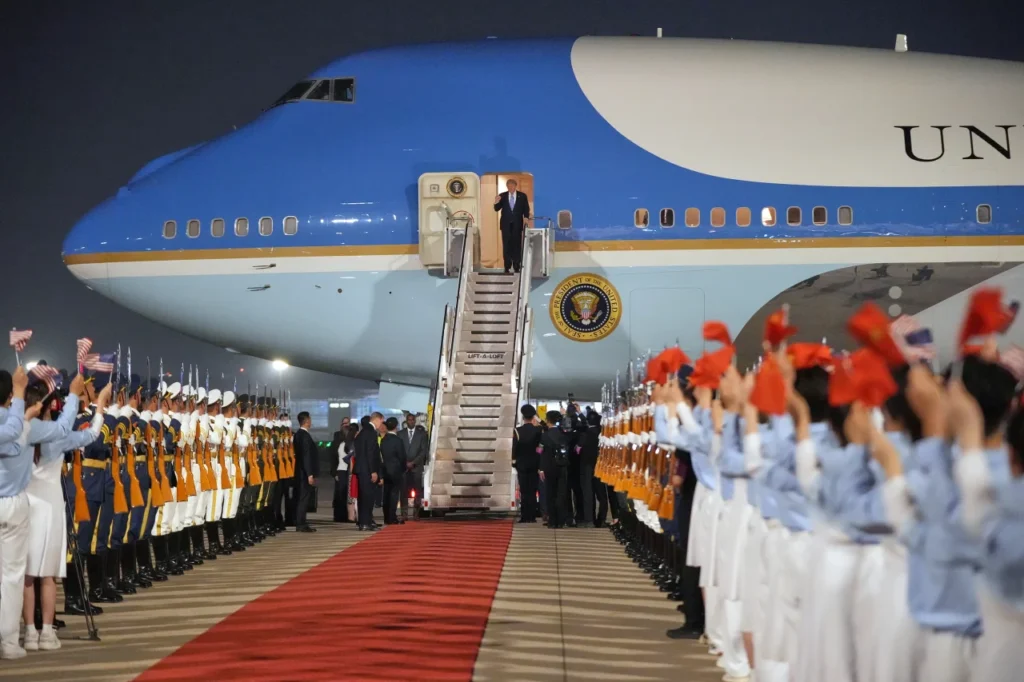
In Washington, the stakes are viewed through several lenses. The war with Iran adds a volatile layer to an already frayed global security architecture. Markets are watching for signals about how the United States intends to balance pressure with dialogue, and whether any easing or escalation in one arena might ripple across others. Meanwhile, the economy—nervous about inflation, supply chain fragility, and the pace of growth—depends on predictability and credible commitments from both sides. The Beijing visit thus becomes less about ceremonial pageantry and more about a practical reset—or at least a recalibration—of expectations on the most essential levers of global commerce and security.
Culturally and rhetorically, the narrative of “two superpowers” carries a heavy burden. It invites comparisons to a decades-long arc of US-China relations, where cooperation and confrontation have alternated in rhythm with crises and breakthroughs. The arrival in Beijing signals a willingness to engage, to test the waters, and to acknowledge that the path forward will likely be a blend of competition and cooperation. In such a frame, even ordinary moments—a smile here, a nod there, a carefully parsed statement—become data points in a broader strategy.
For observers, the choreography around the meeting is telling. The presence of both ambassadors at the arrival ceremony—and the formalities that accompany such encounters—serves as a reminder that diplomacy is as much about perception as policy. The optics matter: a respectful reception by Chinese officials, moments of shared conversation, and the possibility of new commercial announcements or joint initiatives. Each of these elements can signal a different weight to negotiations and influence markets’ reactions in real time.
Yet, the ground truth remains messy. Trade talks are rarely linear. They bend with domestic pressures, political calendars, and unexpected geopolitical surprises. The Washington- Beijing dynamic has always been a tug-of-war between mutual vulnerability and strategic leverage. In this light, the Xi meeting could yield a spectrum of outcomes—from a pragmatic set of agreements that stabilize a tense relationship to a more fragile détente that relies on ongoing, incremental negotiations.
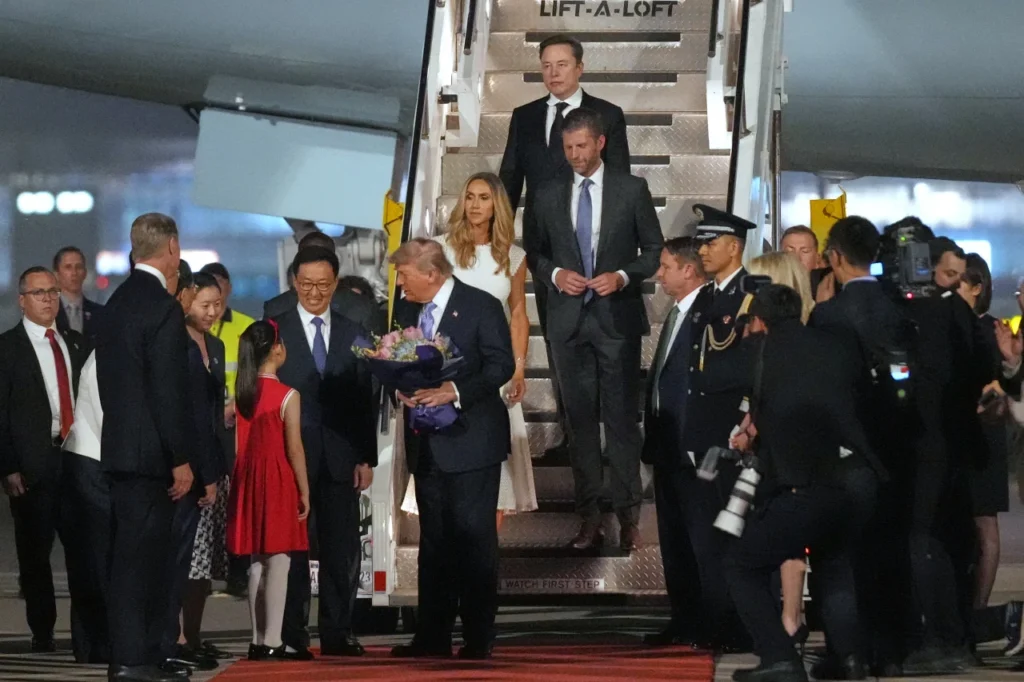
Blog readers interested in the domestic implications should watch how this trip resonates back home. If the administration can broker not just a temporary détente but a framework that reduces economic anxiety and clears some of the fog around sanctions, tariffs, and tech access, markets and manufacturers could welcome a period of cautious optimism. If, however, the conversations reveal deep-seated divergences—on issues ranging from intellectual property protections to regional security commitments—expect continued volatility in headlines and cautious moves in boardrooms worldwide.
As the world waits for the next chapter of this high-stakes engagement, one fact remains clear: leadership today requires balancing power with prudence, strength with restraint, and national interest with global responsibility. The Beijing arrival, the extended conversations to come, and the nuanced messaging from both capitals will collectively shape the global order in the months ahead.
In the end, whether you view this as a clash of ideologies, a balancing act of interests, or a pragmatic attempt to stabilize a world aflame with risk, the key takeaway is simple: the meeting between President Trump and Xi Jinping isn’t merely about who holds the bigger hammer. It’s about who can wield influence with enough precision to turn potential volatility into a more predictable, more prosperous future for their citizens and the