



Ghana is turning to its most golden opportunity yet: leverage the country’s mineral wealth to shore up its reserves and stabilize the cedi. The plan is simple in concept, ambitious in scope, and bold in timing. By expanding the central role of gold in the economy, Ghana aims to turn mining output into a strategic asset for macro stability.
What’s changing, exactly?
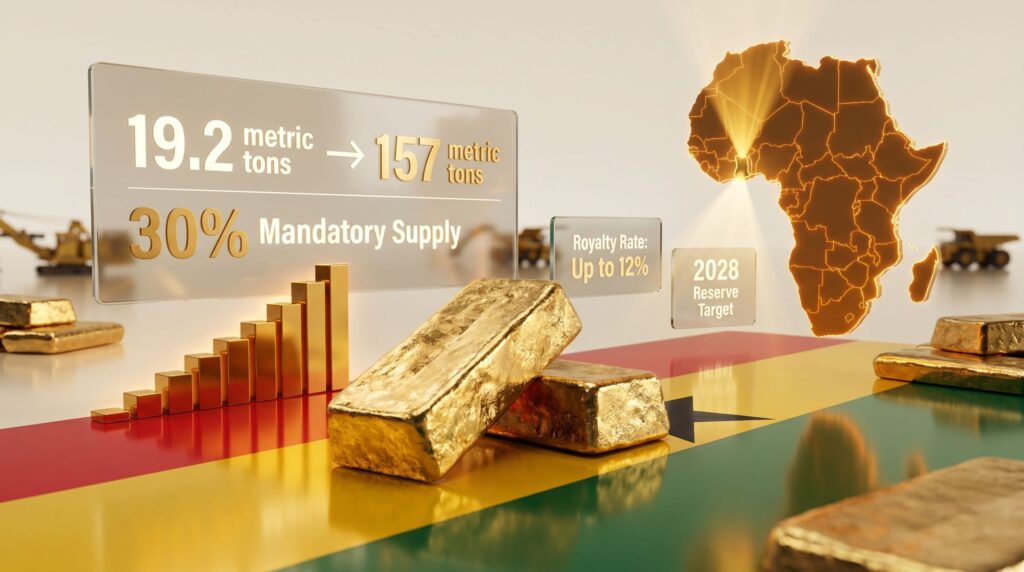
The core idea is to increase the amount of gold the Bank of Ghana purchases from mining companies each year. Specifically, the government intends to buy a larger share of annual gold production to stockpile reserves and provide USD-backed liquidity that can cushion the cedi against shocks. In practical terms, this means a higher percentage of mined gold flowing into the central bank’s vaults, beyond the conventional export channels.
Exactly as stated in the public discourse, the plan is captured by this line: Ghana plans to increase the amount of gold sold by mining companies to the Bank of Ghana from 20% to 30% as part of efforts to build reserves and support the cedi, according to Reuters.
Why this move matters
- Reserve resilience: Gold is a trusted store of value. By increasing central bank purchases, Ghana can diversify its reserve base and reduce exposure to foreign exchange volatility.
- Currency stability: More gold on the Bank of Ghana’s balance sheet can provide a stabilizing anchor for the cedi, especially in times of global uncertainty.
- Investor clarity: A formal mechanism for integrating mining output into monetary policy signals can boost confidence among investors seeking policy coherence.
How it could play out on the ground
- Collaboration with miners: A transparent framework will be essential. Clear terms, pricing mechanisms, and timelines will help miners plan capital investments while meeting the central bank’s reserve goals.
- Market impact: If the Bank of Ghana commits to regular purchases, miners may align production schedules and sales strategies to optimize both cash flow and reserve accumulation.
- Economic ripple effects: Beyond reserves, the initiative could influence domestic gold-related jobs, processing, and ancillary services, potentially boosting local economies near mining hubs.
Risks and considerations
- Price sensitivity: Gold price swings could affect the cost and benefit calculation for the central bank’s reserve strategy.
- Operational logistics: Efficiently moving and storing gold requires robust security, auditing, and storage facilities.
- Sovereign policy balance: The plan must harmonize with export goals, fiscal policy, and regional market dynamics to avoid unintended trade-offs.
A hopeful outlook
If executed with transparency and robust governance, this plan could strengthen Ghana’s macro stability while preserving its precious metals edge. It’s a strategic experiment: convert a natural resource into a steady macro-instrument, not just a revenue stream.
Final thought
Ghana’s push to elevate gold’s role in national reserves signals a different kind of economic storytelling—one where mining output feeds both quarterly budgets and long-term financial resilience. As the plan unfolds, watchers will be keen to see how the numbers translate into a stronger cedi and a sturdier gold-backed foundation for Ghana’s