

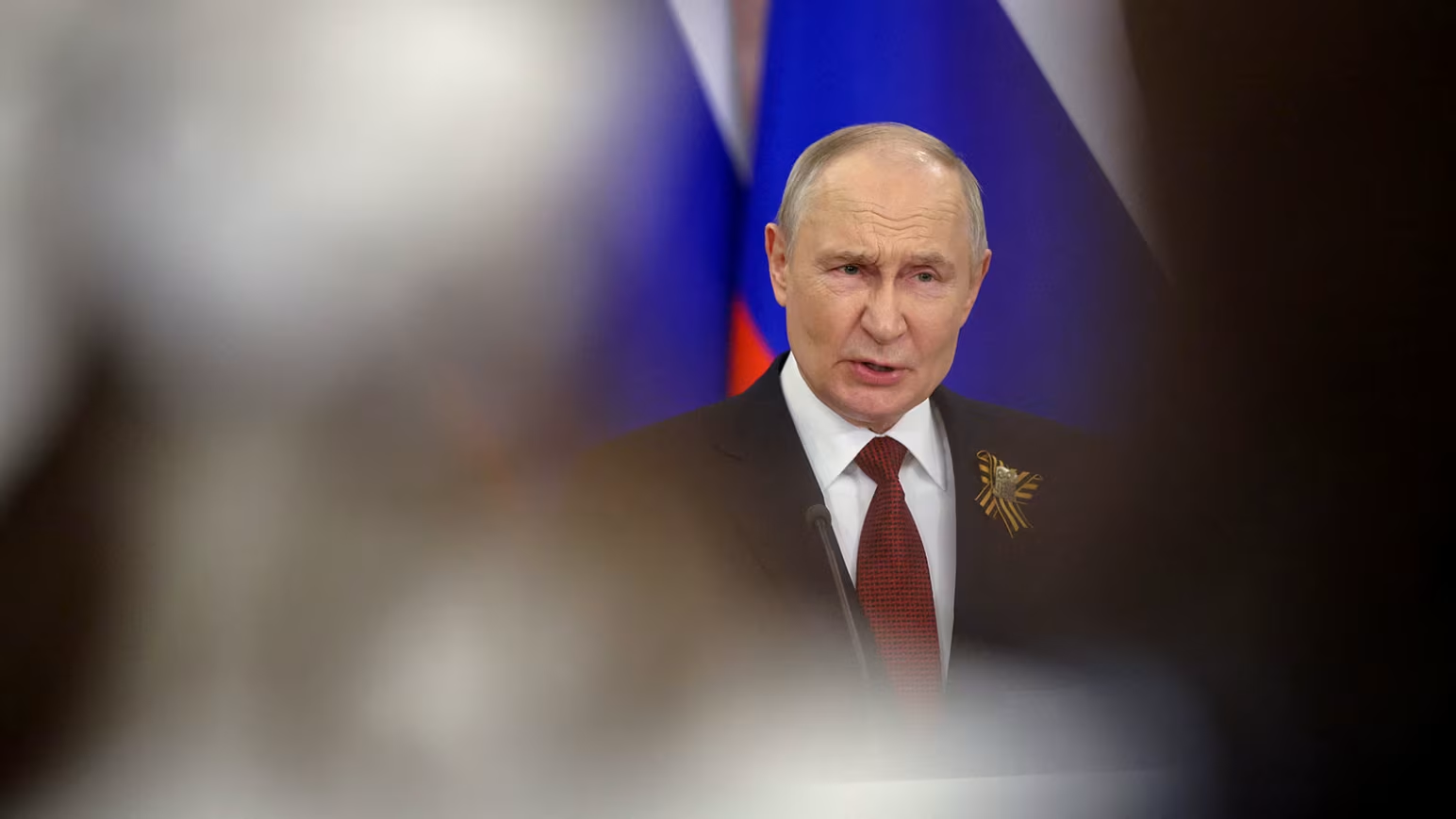
Beijing is scripting a careful choreography of power, diplomacy, and perception. Less than a week after Xi Jinping rolled out the red carpet for US President Donald Trump, the Chinese leader is hosting another guest of honor – and this time it’s a close ally. Russian President Vladimir Putin is set to arrive in the Chinese capital Tuesday for a state visit clearly calibrated to show Beijing and Moscow’s alignment in the face of global geopolitical upheaval.
The setting: a Beijing that loves a well-timed public signal
Xi’s China has long understood the value of optics in geopolitics. State visits aren’t just about kitchen tables and handshake lines; they’re performances that send messages about who stands with whom, and how the world should read that alignment. In the wake of Trump’s high-profile trip, Beijing pivots quickly to demonstrate continuity and resilience in its international posture. The arrival of Putin—arguably the Kremlin’s most steadfast ally in recent memory—appears as the deliberate second act in a two-part show designed to reassure allies and unsettle rivals.
A double act with a clear message
The cadence is unmistakable: show the world that Beijing can host a diverse spectrum of partners—from the brash pivot of the United States to the steady, long-standing bond with Moscow. The Putin visit is not a one-off courtesy call; it’s a signal that Beijing is pursuing a multi-vocal foreign policy, capable of aligning with different great powers without losing its own strategic autonomy. The shared backdrop is a global order under stress—economic chill, security flashpoints, and a world where blocs are reconstituting themselves in new configurations.
What the talks are likely to cover
- Energy and infrastructure: Russia’s vast energy resources—oil, natural gas, and beyond—have long been a cornerstone of Sino-Russian cooperation. Expect discussions that plot routes, prices, and joint ventures that tie together Siberian supplies with Chinese demand in ways that hedge against Western sanctions and market volatility.
- Security and strategic posture: With the world watching nuclear shadows, cyber threats, and regional flashpoints, Beijing and Moscow will probably refine their stances on crisis management, defense technology exchanges, and military-industrial collaboration. It’s not about a North Star alliance, but about a resilient, complementary partnership that can operate in parallel with other relationships.
- Economic resilience: The two giants can talk latitude in trade, investment, and currency arrangements that reduce exposure to Western-led financial systems. Expect dialogues about how to weather sanctions, diversify supply chains, and accelerate domestic innovation while keeping mutual markets open.
- Global governance and messaging: Both power centers have grievances with existing international norms. A joint communiqué could emphasize sovereignty, non-interference, and reform of global institutions—an insinuation that the West’s favored order is not the only viable framework.