

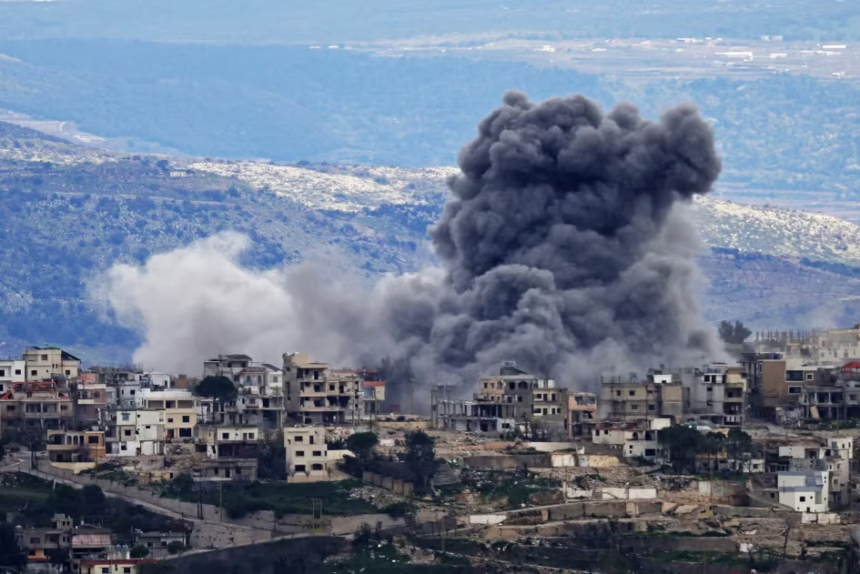
In recent days, headlines have screamed a troubling phrase: Evacuation threats. Israel intensifies attacks in southern Lebanon. The reality on the ground is a tangle of high-stakes politics, shattered lives, and stubborn questions about how civilians can stay safe when war drums beat along a volatile border.
What’s happening (in brief)
- Escalation on the Lebanon-Israel border has left communities perched at the edge of displacement.
- Civilians in southern Lebanon are grappling with airstrikes, artillery, and the constant fear of a broader spillover.
- Israel and its neighbors are voicing security concerns in ways that complicate humanitarian access and safe passage for those trying to flee to safer areas.
Why evacuation threats are making headlines
- Proximity to the frontline: The border region’s geography means that even “localized” strikes can feel immediate and personal for families living in towns and villages barely a few miles from the combat zone.
- Timelines and uncertainty: Evacuation orders, whether formal or informal, create a gray zone in which people weigh the risk of staying put against the dangers of moving through unstable terrain, checkpoints, and crowded shelters.
- Humanitarian access at risk: When fighting intensifies, aid deliveries and safe corridors become uncertain, heightening the urgency of evacuation plans and the fear of being trapped.
Human stories behind the headlines
- A mother deciding whether to move her children to a safer area, balancing the risk of a long journey against the dangers of staying in a damaged home.
- A nurse coordinating patient transfers as hospitals near capacity, hoping for a corridor that stays open long enough to evacuate those in need.
- A shopkeeper packing essentials at dawn, listening for the telltale roar of shells, praying that evacuation routes remain passable.
Geopolitical dynamics to watch
- Air and ground campaigns can redefine security zones overnight, altering who is considered a target and who is deemed a civilian.
- International attention and mediation efforts can influence local decisions about evacuation, safe corridors, and the pace of humanitarian aid.
- Long-term effects on communities: physical destruction is only part of the story; livelihoods, education, and social networks are often the slowest to recover.
What evacuation means in practice
- Safe corridors: Negotiated routes that allow civilians to move away from danger with protection from harm.
- Shelters and support: Temporary housing, food, medical care, and mental health support become lifelines as people wait out the danger.
- Documentation and displacement tracking: Even in chaos, keeping track of who moves where matters for aid distribution and eventual return.
What civilians should consider
Maintain critical supplies: medications, water, essential documents, and a small bag with basic needs.
Confirm the latest guidance from trusted authorities and humanitarian organizations before moving.
If evacuation is possible, plan routes with multiple contingencies in case a primary path becomes unavailable.
Prioritize vulnerable family members: children, the elderly, the sick, and those with disabilities may require additional help.