

In the annals of East Asian diplomacy, the relationship between Beijing and Pyongyang has always walked a tightrope—one part strategic alliance, one part historical entanglement, with a dash of theater for public consumption. The highs, when synchronized interests align, create a momentum that can reshape regional dynamics. The lows, when familiar fault lines reappear, remind observers that mutual dependency is not the same as mutual affection.
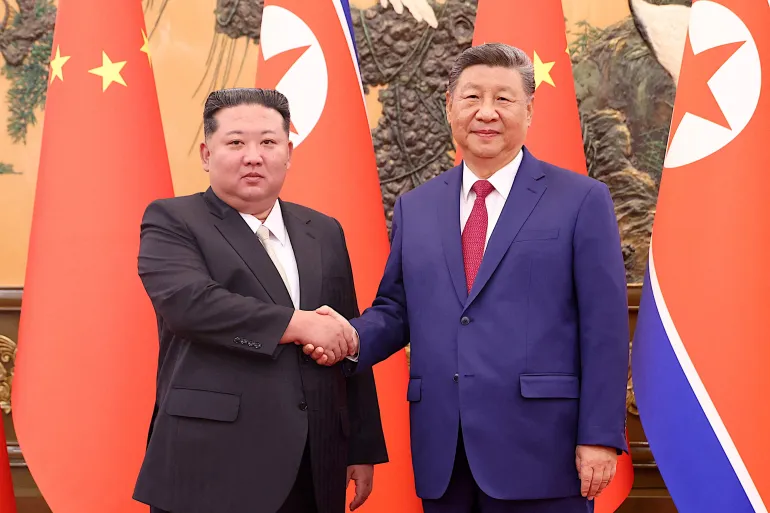
A recent public display captured the symbolic core of this relationship: a state ceremony that staged charisma and alignment in a way no backroom briefing can. The moment when diplomacy becomes spectacle is a window into intentions, hard power calculations, and the soft power of neighborly loyalty. The public choreography can be as telling as the private conversations that stay behind closed doors.
As close as lips and teeth: The highs and lows of China-North Korea ties are never just about ideology or trade. They hinge on balance—Washington’s pressures, Seoul’s regional posture, and Beijing’s own calculus about stability on its borders and influence in the Korean Peninsula. When visa-like access to North Korea’s political theater is granted, it signals Beijing’s desire to preserve a predictable environment in which its core interests are protected.
Consider the literal theatre that sometimes accompanies high-profile visits. The sentence that often frames this dynamic is more than a description of pageantry; it is a snapshot of the underlying calculus:
“Chinese President Xi Jinping arrived in Pyongyang on Monday to the full theatre of North Korean state ceremony, with flags, flowers, military honours and crowds to welcome the leader of the country that has long been one of North Korea’s closest allies. Kim Jong Un and his wife, Ri Sol Ju, greeted Xi and wife, Peng Liyuan, at Pyongyang’s international airport before the Chinese leader was taken to the capital’s main square, where portraits of Xi and Kim looked out over the choreographed display of friendship.”
That sentence, in its rhythm and imagery, captures several truths:
- Public symbolism: Flags, flowers, and portraits frame the relationship as a curated partnership.
- Personal diplomacy: Leaders and spouses meeting at the airport and moving through a ceremonial space signals a human dimension to state strategy.
- Historical context: “One of North Korea’s closest allies” is not a label earned overnight; it reflects decades of alignment and intermittent friction.
The highs come when such displays are followed by tangible gains—economic cooperation, security assurances, and confidence-building measures that reduce the risk of misperception on the peninsula. The lows appear when the alliance serves as leverage for broader bargaining, or when external pressure frays once-unified lines of communication.
In assessing China-North Korea ties, observers watch for several indicators:
Degree of policy coordination on key issues (military posture, sanctions, humanitarian channels).