
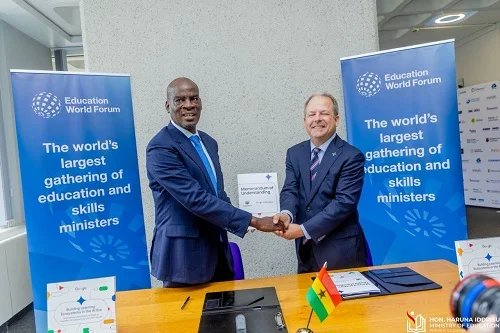
The Ministry of Education has signed a landmark Memorandum of Understanding (MoU) with Google for Education to modernise the country’s learning landscape, signaling a bold shift toward immersive, tech-enabled classrooms and equitable access for every student.
Why this matters
- A future-ready curriculum: The partnership aims to integrate digital tools, adaptive learning, and data-informed instruction so students can thrive in an ever-evolving job market.
- Equity at the core: By leveraging cloud-based platforms and affordable devices, the deal seeks to close gaps in access to high-quality educational resources across urban and rural areas.
- Teacher empowerment: Professional development, collaborative platforms, and AI-assisted teaching aids will help educators personalize instruction and manage learning more efficiently.
What the deal encompasses
- Modernised digital infrastructure: Upgrading networks, devices, and classroom hardware to support seamless learning experiences, from coding clubs to virtual labs.
- Google for Education tools: Google Classroom, Meet, Docs, Slides, and Drive will be deployed at scale to streamline assignments, feedback, and collaboration.
- Safe, student-centered AI: Educational AI features will be used to tailor practice, monitor progress, and identify intervention needs while prioritizing privacy and safety.
- Open resources and training: A robust program of educator training, curated digital curricula, and access to vast repositories of learning materials.
The classroom of tomorrow
Imagine a classroom where:
- Students collaborate in real-time on projects, regardless of location, using cloud-based documents and video collaboration tools.
- Teachers receive actionable insights from analytics to tailor instruction, reduce gaps, and accelerate learning for students who need it most.
- Administrators streamline operations, reduce administrative burden, and allocate resources where they’re most impactful.
Why now
Global education ecosystems are rapidly shifting toward hybrid models, digital literacy, and scalable platforms. This MoU positions the country to:
- Accelerate literacy and numeracy gains through adaptive learning paths.
- Prepare students for STEM and non-STEM futures with practical, lifelong-learning skills.
- Build a resilient education system capable of weathering disruptions.
What to watch for next
- Rollout timeline: Phased implementation across schools, with milestones for hardware, software deployment, and teacher training.
- Privacy and security: Clear safeguards on student data and transparent governance to maintain trust.
- Local customization: Content and platforms adapted to national curriculum standards and regional languages.
Bottom line
The Ministry of Education has signed a landmark Memorandum of Understanding (MoU) with Google for Education to modernise the country’s educational landscape. If executed thoughtfully, this partnership could unlock new learning opportunities, support teachers, and ensure every student has the tools to succeed in a digital age.