

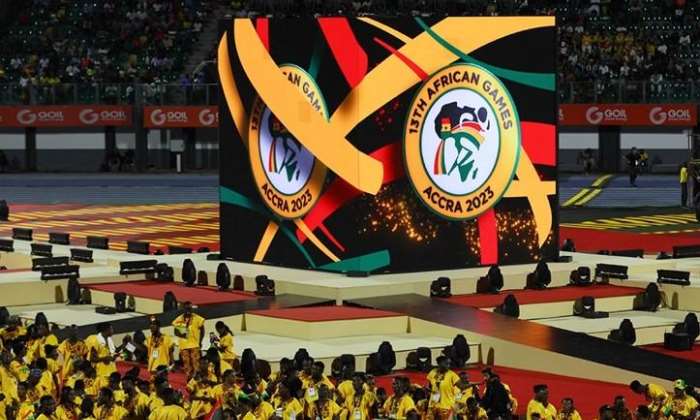
The Ghana Audit Service’s comprehensive audit of the 13th African Games, Accra 2023 — submitted to Parliament on 26 February 2026 — has uncovered total financial irregularities of GH₵580,042,347.40, a staggering catalogue of inflated contracts, procurement violations, undelivered goods, defective infrastructure, and cash payments that bypassed the government’s own financial controls.
- Total irregularities: GH₵580,042,347.40 across multiple ministries, agencies, and contractors involved in the Accra 2023 Games.
- Inflated contracts: Several procurement awards exceeded market rates or included phantom costs, inflating the overall price tag for event-related works and services.
- Procurement violations: Bypassing competitive bidding, sole-sourcing without justification, and inadequate vendor vetting that compromised value for money and transparency.
- Undelivered goods and services: Goods and services contracted but not delivered or delivered well after deadlines, creating an ongoing exposure to unutilized or depreciating assets.
- Defective infrastructure: Stadiums, venues, and support facilities with significant defects that required additional spending for remediation or replacement.
- Cash payments bypassing controls: Instances where cash disbursements were not captured by official channels or the government’s financial controls, undermining traceability and accountability.
Why this matters
- Public trust: The irregularities undermine confidence in public procurement and project management for high-profile national events.
- Financial impact: The GH₵580,042,347.40 represents a substantial portion of public funds that could have been deployed to critical sectors such as health, education, or local development.
- Governance and reform: The findings call for strengthened internal controls, procurement reforms, robust contract management, and tighter oversight of event-related expenditures.
Key figures and examples (illustrative)
Control gaps: Weaknesses in approving authorities, inadequate segregation of duties, and insufficient documentation to support payments.
Overpriced contracts: Contracts with inflated unit costs, duplicate line items, or add-ons billed as “essential” without demonstrable value.
Non-performance risk: Contractors awarded for venues and services that failed to meet specifications or deliver on time, resulting in delayed or compromised event experiences.