

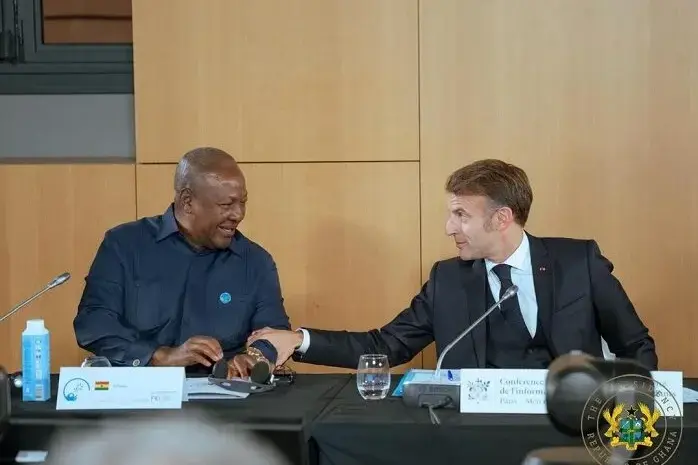
In a move that signals renewed commitment to reckon with a painful history, Ghana and France are set to launch a joint scientific commission on slavery to study the transatlantic slave trade and advance reparatory justice and historical understanding. The collaboration promises to bridge scholarly inquiry, public memory, and policy action in a way that respects the complexities of both nations’ pasts while shaping a more informed future.
What this commission aims to do
- Systematic scholarship: The joint commission will pool historians, archaeologists, social scientists, and archivists from both countries to compile, analyze, and interpret archival materials, firsthand accounts, and material culture related to the transatlantic slave trade.
- Public memory and education: Beyond academic study, the effort seeks to translate findings into curricula, exhibitions, and public programming that can educate diverse audiences about the human experiences at the center of slavery and its enduring legacies.
- Reparatory justice: By situating historical inquiry within a framework of reparative action, the commission aims to identify pathways for restitution, commemorative initiatives, and policy recommendations that address ongoing inequalities rooted in slavery.
- Collaborative governance: The project reflects a shared sense of responsibility between Ghana and France to confront colonial history through transparent research processes, peer-reviewed results, and community engagement.
Why now, and why Ghana and France
The push meets a broader global moment of introspection around colonialism, empire, and the brutal economies built on enslaved labor. For Ghana, a nation with deep historical ties to West African kingdoms and the broader networks of the Atlantic world, the project offers a chance to foreground African perspectives and voices historically erased or sidelined. For France, a country with a complex colonial footprint and a long Atlantic history, the initiative presents an opportunity to confront difficult chapters, acknowledge harms, and participate in restorative practices rooted in scholarship.
A framework built on credibility and care
The commission is designed to be methodical, transparent, and inclusive. Expect:
- Multidisciplinary research programs that draw on archives in European, African, Caribbean, and North American repositories.
- Language-accessible outputs to ensure that findings reach scholars, educators, policymakers, and local communities.
- Ethical guidelines that protect descendants and communities affected by slavery, with avenues for consultation and feedback.
- Clear milestones, peer review, and public reporting to maintain accountability and public trust.
Potential impacts beyond academia
- Educational reforms: Findings could inform school curricula, university courses, and public history projects, contributing to a more nuanced, human-centered understanding of slavery’s legacy.
- Policy and reparative measures: The research could shape debates on restitution, memorialization, land rights, and access to cultural heritage, linking historical justice to contemporary inequities.
- Cultural revival and dialogue: Joint exhibitions, memorial initiatives, and cultural exchanges may amplify voices from communities historically affected by the slave trade, fostering healing and mutual learning.
A note on the language of repair
This commission’s framing around reparatory justice signals a shift from solely documenting history to actively shaping its consequences. It acknowledges that understanding alone is not enough; informed, concrete steps must be taken to address harm and unequal outcomes rooted in the past. The collaboration seeks to balance intellectual rigor with empathy and practical action.
Risks and considerations
- Navigating sensitive memories: The topic touches on collective trauma and national pride. The commission will need careful, ongoing engagement with civil society, affected communities, and with historians who bring diverse methodological perspectives.
- Balancing voices: Ensuring representation from African scholars, diaspora voices, and Caribbean and Latin American perspectives will be essential to avoid a narrow, eurocentric view of a global history.
- Protecting the integrity of sources: Access to archives must be handled with respect for privacy, provenance, and the rights of institutions and communities to control their records.
A call for global participation
While the focus is Franco-Ghanaian collaboration, the project invites broader international participation. Scholars, museums, and civil society organizations around the world are encouraged to engage with the commission’s findings, contribute data, and connect with descendants seeking clarity, acknowledgement, and opportunities for repair.
The road ahead
As this commission takes shape, it offers a model for how nations can confront a fraught past with intellectual seriousness and moral responsibility. The joint effort between Ghana and France reflects a grown willingness to move from confrontation to collaboration—turning painful history into informed understanding and meaningful action.
For readers, the news offers a reminder: history is not only a record of what happened but a living project that can shape justice, memory, and policy. The study of the transatlantic slave trade under a transnational banner may illuminate pathways to reparatory justice and historical understanding that benefit future generations worldwide.