


Ghana set to evacuate 300 citizens from South Africa on May 21, 2026, as part of a government repatriation exercise following safety concerns, with more batches expected
In a move that underscores rising global travel anxieties and proactive citizen protection, Ghana announced plans to evacuate 300 citizens from South Africa on May 21, 2026, as part of a government repatriation exercise following safety concerns, with more batches expected. The announcement, issued by the Ministry of Foreign Affairs and Regional Integration, confirms that the government is prioritizing the safety and well-being of Ghanaians abroad amid heightened security concerns in some parts of the region.
The logistics of such an operation are never trivial. The plan involves coordinated air travel, security escorts where necessary, and a pre-departure briefing to ensure all travelers are aware of the procedures, eligibility, and support available during transit. The government has indicated that the evacuation is primarily for ordinary citizens with valid passports and no outstanding legal issues, though exceptions may be considered on a case-by-case basis for families with vulnerable members or dependents.
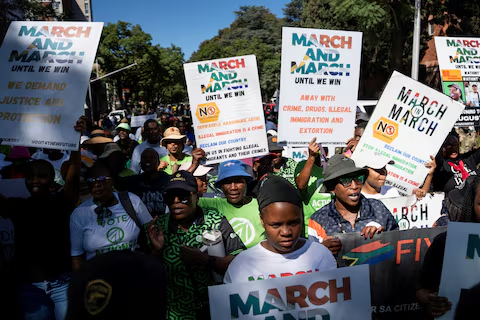
Why now, and why South Africa? The timing aligns with a broader pattern of governments reassessing risk data in regions with fluctuating safety indicators. South Africa, a key economic partner and a destination for many Ghanaian students, workers, and tourists, has seen intermittent protests, sporadic crime spikes in certain areas, and evolving security advisories. Ghana’s decision to conduct a targeted evacuation reflects a precautionary approach: keep citizens out of harm’s way while the situation stabilizes and official guidance improves.
For many Ghanaians living abroad, the news brings a mixed bag of relief and cautious optimism. On the one hand, a structured repatriation plan can provide a clear path home, with support services from consular staff and transport arrangements arranged through the government’s international network. On the other hand, any evacuation reminds travelers that international mobility carries inherent risks, and contingency plans must be in place for rapid changes in safety conditions.
What happens next? The government has outlined several key steps:
- Verification and registration: Eligible citizens are likely to be required to register with the Ghanaian embassy or consulate, verify their travel documents, and provide emergency contact details.
- Transportation logistics: Arrangements will be coordinated with partner airlines and international agencies to secure seats on scheduled or chartered flights, ensuring the fastest and safest possible route back to Ghana.
- In-country support: Consular teams will establish a safe-en-route protocol, including medical screening, briefings on travel advisories, and arrangements for those needing assistance upon arrival, such as temporary accommodation or transportation to regional hubs.
- Repatriation batches: The statement notes “with more batches expected,” signaling that this is the first of several waves designed to manage capacity and respond to ongoing safety assessments.
Public reaction has been largely supportive, with many Ghanians praising the government for proactive citizen protection while others call for transparent criteria and timely updates. In today’s interconnected world, such evacuations are often a balancing act between the urgency of a crisis and the practicalities of logistics, funding, and coordination with host-country authorities.
The broader conversation also touches on the role of diaspora communities in national development. While evacuations are about safety in the short term, governments increasingly view diaspora engagement as a long-term strategic asset. Clear communication, reliable evacuation protocols, and ongoing consular support can strengthen trust between citizens abroad and their home government, ultimately benefiting bilateral relations and investment climate.
If you’re a Ghanaian living in or planning to travel to South Africa, here are practical tips to stay prepared:
- Stay informed: Monitor official government advisories and register with the Ghanaian embassy or high commission to receive timely updates.
- Have a readiness kit: Keep digital and physical copies of essential documents (passport, visa, ID), emergency contacts, and a small amount of local currency and a spare power bank for devices.
- Know your evacuation plan: Understand the steps a government evacuation entails, including how to respond if you’re asked to evacuate, where to meet transport, and what to expect on arrival back home.
- Maintain flexible travel plans: Where possible, avoid high-risk areas, travel during daylight, and review insurance coverage for emergency repatriation.
The situation also serves as a reminder to businesses and students abroad to maintain contingency plans, including robust health and personal safety measures. Universities, employers, and community organizations can play a pivotal role by disseminating official information quickly and helping affected individuals navigate the process.