
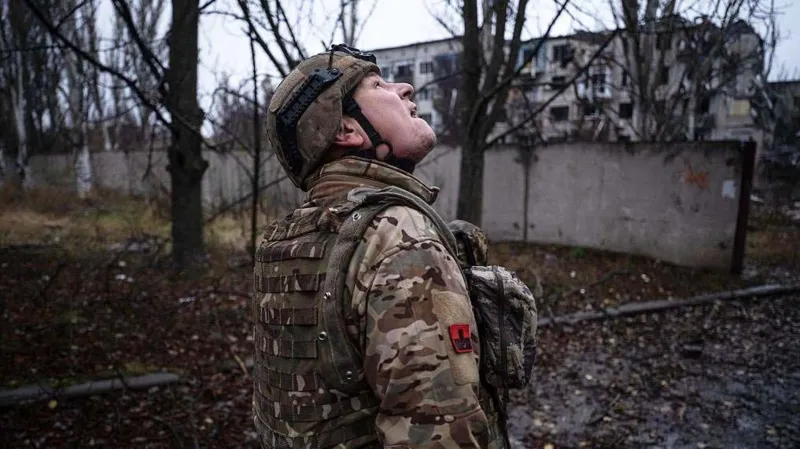
War is often described in terms of strategy, logistics, and political will. But in the first-hand shadows of Ukraine’s front line, a different vocabulary has begun to dominate: a mix of metal, software, and nerves that turns minutes into decisions and distances into peril. Inside the ‘kill-zone’ on Ukraine’s front line, where new weapons have transformed war, the battlefield looks less like a single theater and more like a living systems diagram—where sensors, satellites, drones, and decoys knit together into a new tempo of conflict.
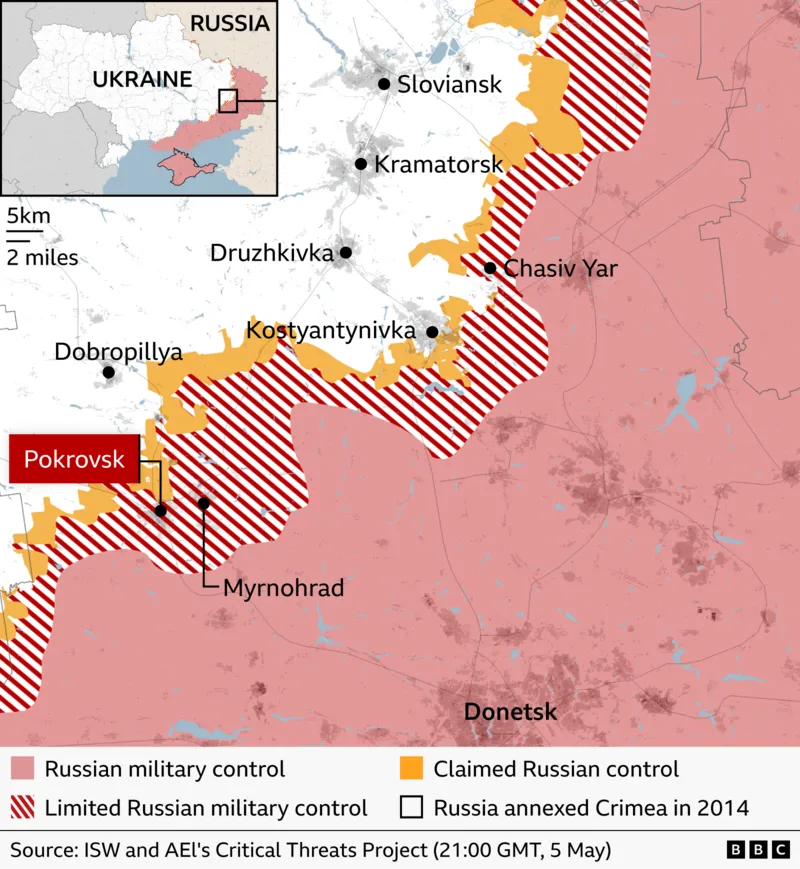
The kill-zone is not a single strip of land; it’s a shifting boundary defined by who can see further, react faster, and endure more punishment without blinking. For soldiers, it’s a narrow corridor of safety that shrinks whenever a new round of tactics lands on the ground. For commanders, it’s a test of how quickly a plan can be reprogrammed in response to a changing threat matrix. And for civilians nearby, it’s a stark reminder that proximity to the front line now comes with a different kind of risk—technological risk, strategic risk, and the human risk that remains constant no matter the gadgetry.
What has transformed the front line isn’t a single breakthrough, but an ecosystem of advances that amplify either side’s reach and precision. Drones—both small quadcopters and larger, longer-range aerial platforms—have become the eyes and sometimes the hands of modern warfare. They scout terrain, track movements, and drop payloads with a level of discretion and speed that old reconnaissance platforms could only dream of. The same drones can be repurposed for reconnaissance, signaling, or electronic warfare, creating a chattering, data-rich layer above the ground that negotiates the tempo of each engagement.
Long-range missiles and precision-guided munitions extend the map of danger well beyond what human troops can safely observe. The ability to strike at critical nodes—bridges, supply depots, command posts—without massed formations has altered the calculus of risk and resource allocation. In the kill-zone, a single accurate strike can erase hours of maneuvering and force a retreat that would have required days or weeks of logistics and planning in the past.
Electronic warfare and cyber elements complete the triad. Jamming signals, spoofing GPS, and disrupting communications create a fog of uncertainty that can be as decisive as a direct hit. It’s not just about breaking the other side’s hardware; it’s about fragmenting the decision cycle. When a commander can’t trust the map, or a squad can’t coordinate its fire plan, timing fractures and the initiative tilts.
Amid these capabilities, human operators adapt in real time. They learn to read the Morse code of the battlefield—the cadence of drone chatter, the telltale gaps in a radar screen, the hum of a generator behind a trench. The human factor remains crucial: courage, caution, and the ability to improvise under pressure. The best technologies do not replace judgment; they extend it, pushing decisions to the edge of what is possible and forcing a constant recalibration of risk and reward.
The ethical and strategic questions that accompany this transformation are not abstract. If a single drone can “zero in” on a target from miles away, what happens to the threshold of restraint? When missiles arrive with surgical precision, does the cost of error drop or become more consequential because the margin for error is smaller? And as both sides accumulate more sensors and more data, who owns the narrative of what happened in the kill-zone—the observer, the operator, or the machine that calculates the next move?