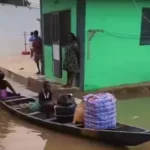


As the rains arrive with their familiar rhythm, a town that knows too well the power of water finds itself once again testing its resilience. The spillage from the Weija Dam has displaced families, submerged homes, and sent communities scrambling to salvage what they can. Tetegu, Sampah Valley, and Choice—three areas that sit along the spill line—now tell a story of survival, solidarity, and sprinting to higher ground with every downdraft of floodwater.
The scene on the ground feels almost cinematic, but the stakes are painfully real. Roads that once carried the hum of daily life are transformed into rivulets and makeshift channels. Stores that stocked everyday essentials now stand under murky swells, their shelves mirroring the uncertain future of small-business owners who depend on steady foot traffic and predictable weather. And in the midst of it all, families cling to what matters most—photos, documents, and the few possessions that carry the weight of a lifetime.
From the vantage point of the affected neighborhoods, the response has been a study in improvisation and communal care. Residents of Weija and surrounding communities have resorted to using canoes to evacuate their valuable belongings after severe flooding caused by heavy rains and the spillage of the Weija Dam submerged homes and displaced families. That sentence, spoken by many who are living it, captures both the urgency and the ingenuity of the moment. In crowded streets turned into canalways, people push, paddle, and pull to move mattresses, radios, cooking utensils, and family mementos to higher ground or to boats anchored on safer patches of water.
In this narrative, water is both adversary and catalyst. It threatens to sweep away years of hard work and the basic comforts of everyday life, but it also invites a collective response that reveals the strength of community ties. Local volunteers, youth groups, and neighborhood associations have coordinated makeshift relief hubs where dry clothes, bottled water, and ready-to-eat meals are shared. The goal isn’t simply to survive the flood but to preserve a sense of belonging and normalcy for those who wake up to new, temporary living arrangements.
The immediate impacts are stark: homes submerged, schools disrupted, and access to essential services stretched thin. Yet within those challenges lies a pattern of adaptation. Some families have moved to higher floors, others to community centers that still have electricity for minimal relief operations, and a growing number are seeking temporary shelter in religious halls, clinics, or designated emergency zones. In conversations with residents, the mood oscillates between fatigue and cautious optimism—an acknowledgment that while the flood is a force of nature, the human response can be a force multiplier for recovery.

One theme that emerges clearly is the importance of accurate information and timely assistance. In the fog of rising water and rapidly changing conditions, residents rely on local leaders, radio updates, and social networks to understand where to go, what to take, and how long to stay. The trust built through years of neighborly exchange becomes an essential asset in times of crisis, guiding decisions about when it’s safe to return to affected streets and when it’s wiser to stay put and wait for help.
Looking ahead, the road to recovery will require more than emergency relief—it will demand long-term planning. Dam managers, municipal authorities, and national agencies must coordinate to ensure safe resettlement options, food security, and the restoration of livelihood avenues that floods often disrupt. The conversation will need to include improved flood defenses, better early-warning systems, and sustainable urban planning that accounts for seasonal rains and climate variability. The goal is not to return to a pre-flood state, but to build a more resilient community that can withstand what nature may bring in the years ahead.
For residents currently navigating the consequences of the spillage, there are practical steps everyone can take:
Support neighbors who may need help lifting heavy items or securing homes and vehicles.
Prioritize safety and avoid crossing floodwaters, which can hide hazards and strong currents.
Keep essential documents, medications, and small valuables in waterproof containers.
Coordinate with local relief centers to access meals, temporary shelter, and medical care.
Stay informed through official channels about evacuation orders and next steps.